- Home
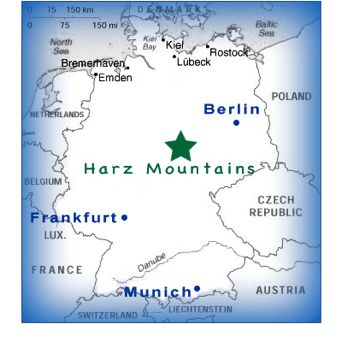
- Harz Mountains
Visiting the Harz Mountains
The Harz Mountains are the land of German fairy tales: steep-roofed houses with tiny windows and narrow, cobblestone streets.
A world of dark forests, rushing streams and stormy mountains.
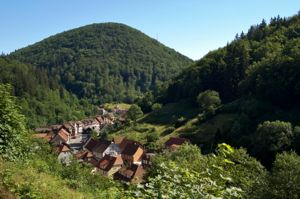 Harz Village (Zorge)
There is something familiar about these little towns tucked away in deep, wooded valleys. These were the scenes of childhood stories: the home of wicked witches, dwarves digging in caverns under the earth and poor woodcutters in lonely cottages.
The Brothers Grimm collected their stories from various places, primarily the area around Kassel about 40 miles to the west, but the Harz Mountains have long been famous as an important source of German folklore.
Many of these stories are well-known outside of Germany as well: Cinderella, Hansel and Gretel, Sleeping Beauty, Rumpelstiltskin, Tom Thumb, Little Red Riding Hood, Rapunzel, The Frog Prince, and The Wolf and the Seven Kids.
Some of the tales seem not to have traveled outside of Germany. Curious to read some of the lesser-known Harz fairy tales? You can read a sampling of the fairy tales here.
This region was also known for the many silver mines; many villagers made their living underground and the towns' wealth came from these mines. There are echoes of this in the story of Snow White and the Seven Dwarves.
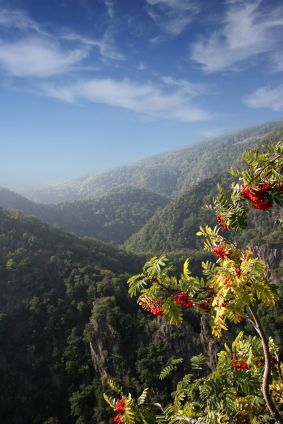 Harz Mountains
I noticed traveling in this area there were almost no English-speaking tourists. This is such a magical and charming area, I hope more people will make the trip and see these half-timbered towns and beautiful forests. It is hard to beat for sheer atmosphere. There are miles of walking trails in the woods to fit any level of hiking ability.
Things to See in the Harz
The Brocken
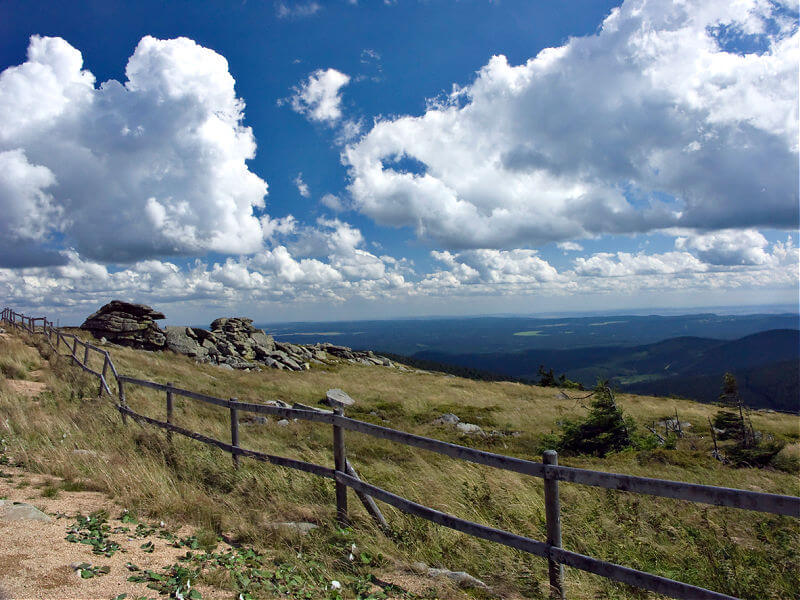 Brocken Summit
The highest mountain in the Harz is the Brocken, setting for one of the most famous scenes in Goethe's Faust.
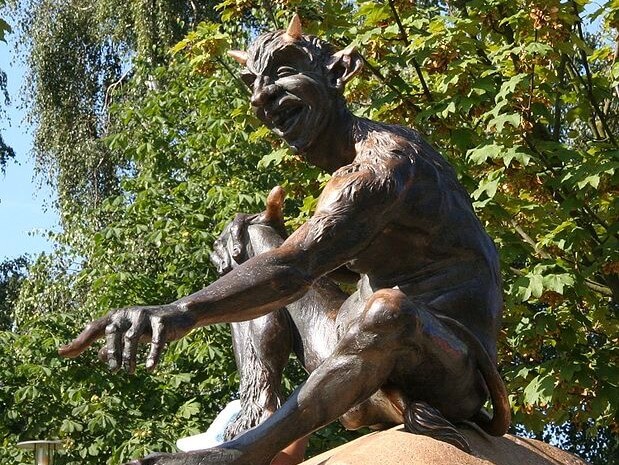
The devil takes Faust up on the Brocken on Walpurgis Night to tempt him, where he watches a wild night of revelry among the witches and other evil creatures.
"Tonight the mountain's mad with magic"-
Faust, Goethe
According to local legend, witches gather on April 30 every year on top of the Brocken for a German version of Halloween.
In a close parallel, Disney's Fantasia, includes an eerie gathering of the forces of evil in Moussorgsky's Night on Bald Mountain; the Brocken also has a treeless summit and a long association with witchcraft and devilry.
Fun Trip: you can ride an old steam train to the top the mountain; the network of narrow-gauge rails runs through a number of towns in the Harz. Wernigerode is the closest to the Brocken.
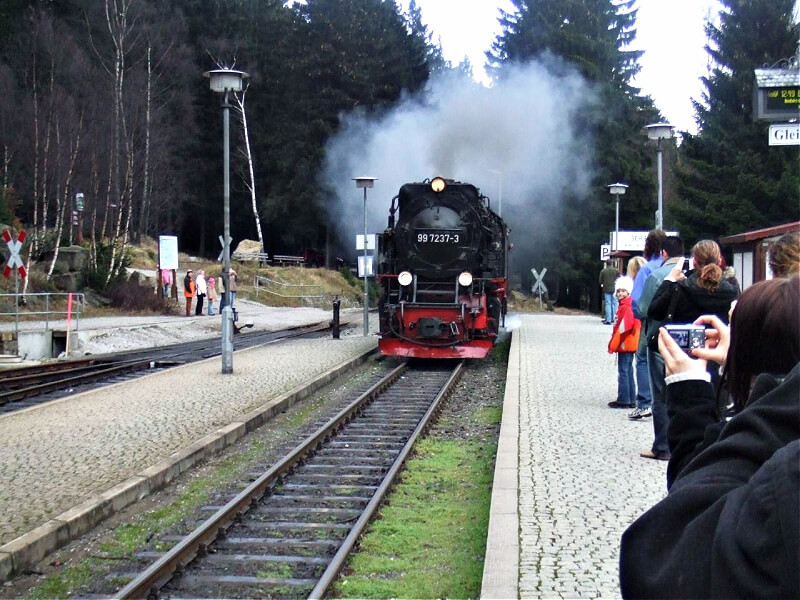 Steam Train, Schierke Station
(Image thanks to Kai Petersen, CC-by-SA license.)
More tips on getting to the Brocken: maps, hikes and catching the train.
Towns in the Harz
The Harz mountains has one of the best collection of well-preserved, 16th century towns in Germany, rich in German history and legend. Here are my top picks:
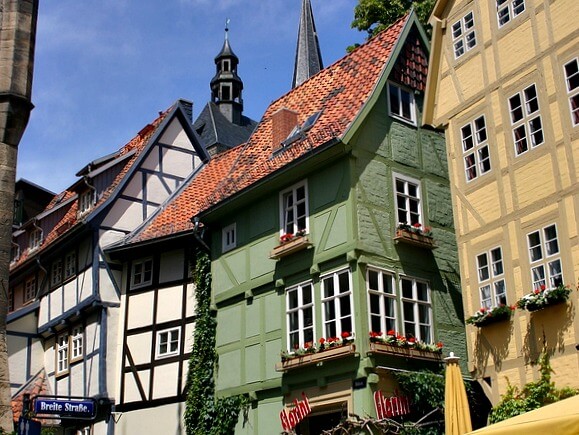
Quedlinburg
Quedlinburg is an impossibly quaint little town, another UNESCO site, ruled by women for most of its history. Quedlinburg was Germany's first capital and was an important city during the Middle Ages. Find out how it's fabulous treasure disappeared and then reappeared after many years.
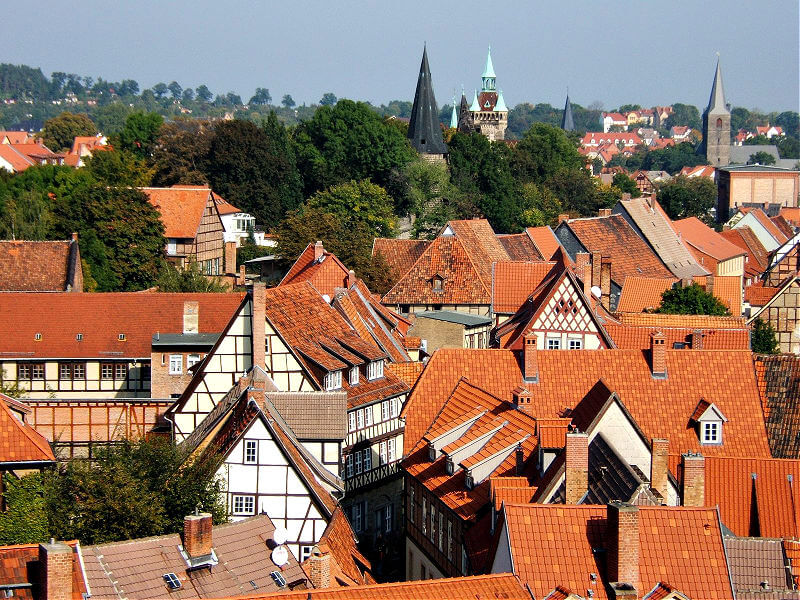 Quedlinburg Rooftops
(Image thanks to Toksave, CC-by-SA license.)
More about Quedlinburg.
To read about the life of Quedlinburg's most famous poet and sample his poetry, go to Friedrich Klopstock.
Goslar
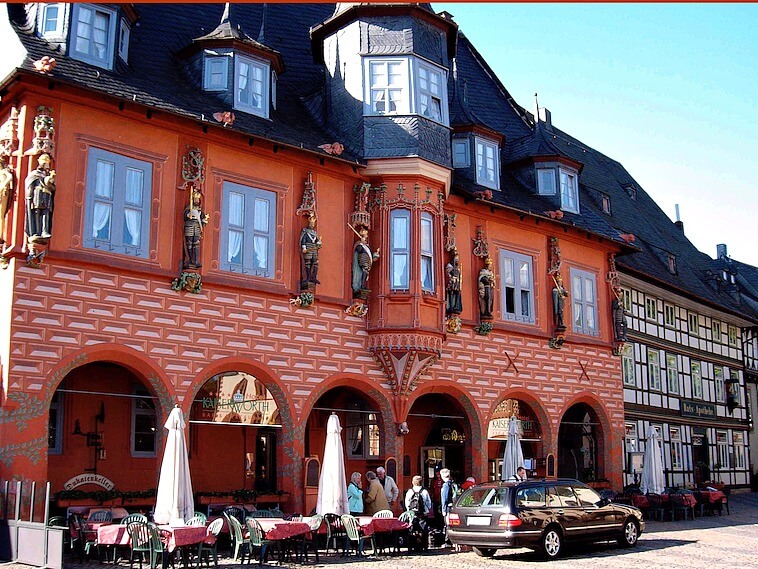
The town of Goslar is delightful place to explore, with street after street of half-timbered houses, or fachwerk.
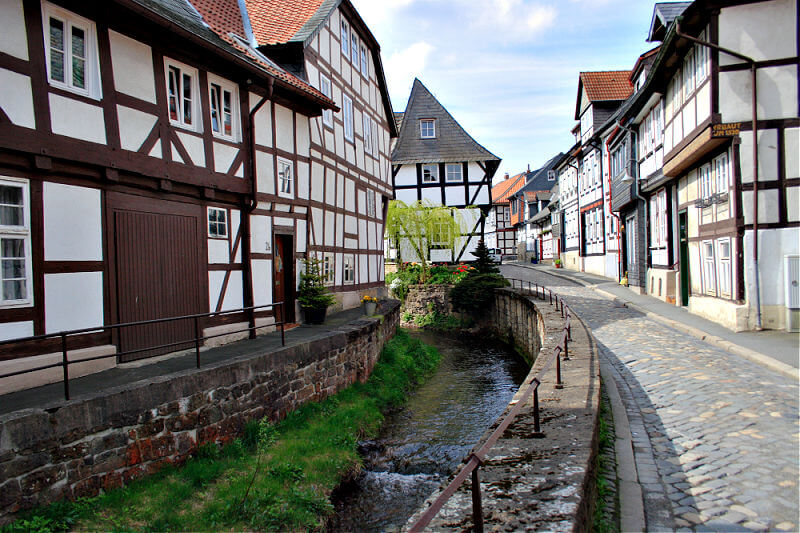 Fachwerk Houses, Goslar
(Image thanks to Y. Shishido, CC-by-SA license.)
Goslar is also famous for remarkable wood carvings on the exterior of its houses, some of which are rather scandalous! On the outskirts of Goslar is the Rammelsberg silver mine which was in operation for over 1000 years and is now a UNESCO World Heritage Site.
You can put on miner's coveralls and go down into the tunnels and ride the miniature train the miners used to travel underground. (Hi Ho!)
More about Goslar.
Wernigerode
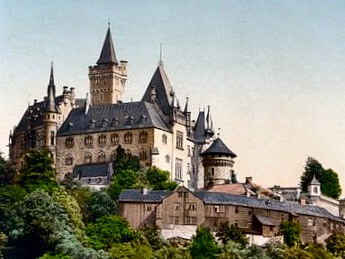
The small town of Wernigerode lies at the base of the Brocken. Its castle sits on a hill overlooking the wonderful collection of medieval houses with elaborate wood carvings.
 Wernigerode Castle
(Image thanks to Michael Wolf, CC-by-SA license.)
From here you can take the steam train all the way to the top of the Brocken, or take the train to Schierke and hike up.
More about Wernigerode.
Thale
A little more off the beaten path is the very small town of Thale. It lies at the entrance to a beautiful river gorge and has a gondola to take you to the mountain top famous for pagan rituals and a history of witchcraft.
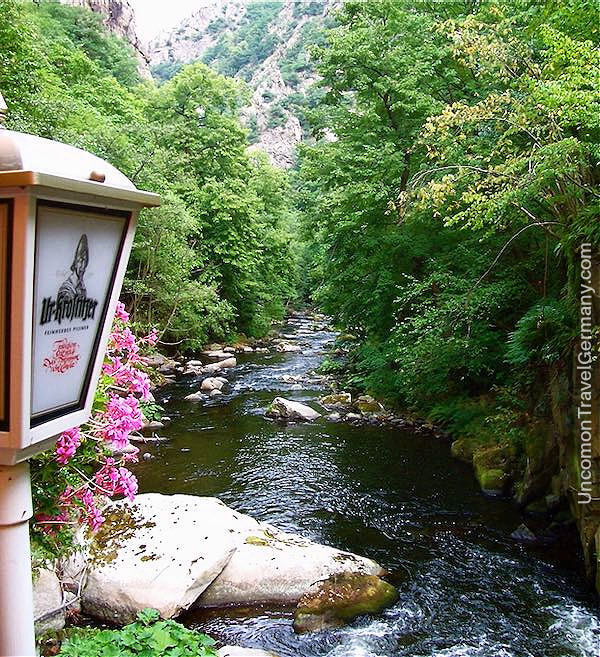 Bode River, Thale
One of the most beautiful (and easiest) walks starts at the edge of the town and follows a trail beside the wild Bode River. Goethe himself is said to have walked there.
More about Thale.
Also in this area is the town of Eisleben, where Martin Luther was born and died.
Haunt of Poets...and more
The poet Heinrich Heine wrote an account of his trip through this area called The Harz Journey. We get a glimpse of what it was like in the early 1800's; this was a popular destination for travelers even then.
"Most beautiful were the golden sun-rays shooting through the dark green of the firs. The roots of the trees formed a natural stairway, and everywhere my feet encountered swelling beds of moss, for the stones are here covered foot-deep, as if with light-green velvet cushions.
Everywhere is a pleasant freshness and the dreamy murmur of streams. Here and there we see water rippling silver-clear amid the rocks, washing the bare roots and fibers of trees.
Bend down to the current and listen, and you may hear at the same time the mysterious history of the growth of the plants, and the quiet pulsations of the heart of the mountain."
He hiked all the way up to the top of the Brocken.
In fact, when we ascend the upper half of the Brocken, no one can well help thinking of the attractive legends of the Blockberg, and especially of the great, mystical German national tragedy of Doctor Faust.
It ever seemed to me that I could hear the cloven foot scrambling along behind, and that some one inhaled an atmosphere of humor.
And I verily believe that Mephisto himself must breath with difficulty when he climbs his favorite mountain, for it is a road which is to the last degree exhausting, and I was glad enough when I at last beheld the long-desired Brocken-house."
Today you don't have to walk up, though it is still a great hike. Either way, once you're up there you have a great view of the area. (See hike from Schierke.)
 Mountain Stream
Getting to the Harz Mountains
For tips on the easiest ways to get there, as well as ways to save money getting around once you're there, see travel to the Harz, including maps.
Map of the Harz
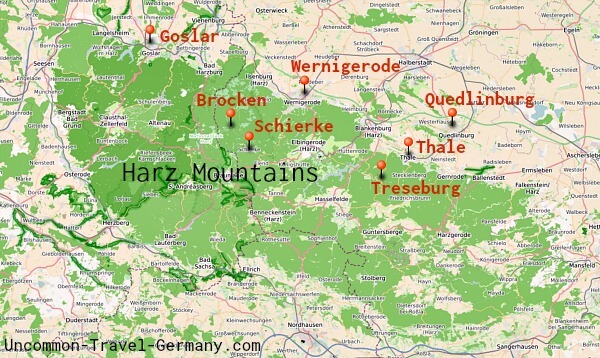
Map data (c) OpenStreetMap and contributors, CC-BY-SA
Towns of the Harz...
See tips on getting to the Harz, as well as how to get around once you're there.
Traveling in Germany
The last remaining Covid restrictions in Germany, in terms of vaccination and masking requirements, ended April 7, 2023.
See current Covid rules for more information.
Share this page:
 With my son, Alex
Hello and Guten Tag!
I'm Karen and I've created this website to share my collection of interesting, and often unusual, places to visit in Germany.
I'm a California native, but I lived in Germany for several years, and have made numerous visits back there to explore this fascinating country... off the beaten track.
Enjoy!
Traveling in Germany

Check the German Rail website (Deutschebahn) for train and bus schedules, prices, and ticket bookings.
Find a place to stay in Germany...
Use Policy Affiliate Disclosure
As an Amazon Associate I earn from qualifying purchases.
Uncommon-Travel-Germany.com
Copyright © 2007-. All rights reserved.