- Home
- Berchtesgaden Area
- Hitler's Berghof
By Karen Updated July 23, 2025
Hitler's Berghof
"These were the best times of my life.
My great plans were forged here" - Adolf Hitler.
Hitler's retreat in the mountains of Bavaria was one of the most important centers of government in the Third Reich. Hitler spent more time in the Berghof than in his Berlin office.
It was in this oversized chalet that Hitler planned the invasions of Poland, France and Russia and the events that would change the lives of millions.
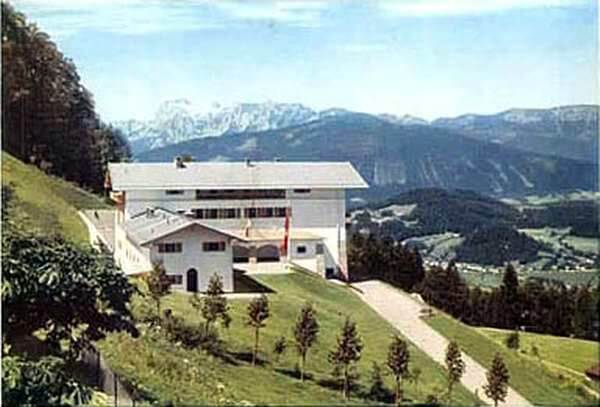 Berghof Obersalzberg in 1936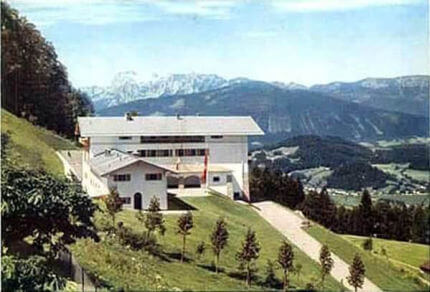
Hitler's first visits to the area
Adolf Hitler's interest in the hills above Berchtesgaden began in 1923, when he came to visit his friend and mentor, Dietrich Eckart, who was living at the Platterhof Hotel. Hitler traveled there under the name of "Herr Wolf" and held meetings with supporters in local guesthouses.
After he was released from Landsberg prison in 1926, following his unsuccessful coup in Munich, he came back to the Obersalzberg.
He stayed in a small cabin (no longer there) on the mountain near the Platterhof. The remainder of Mein Kampf was written during his visit there.
Haus Wachenfeld
In 1928, Hitler rented a pretty, alpine-style vacation home, Haus Wachenfeld, next door to the Hotel zum Türken.
After becoming Chancellor of Germany in 1933, Hitler purchased the house from the money he had made from Mein Kampf (a best seller) and lived there for a couple of years before starting a major expansion of the building.
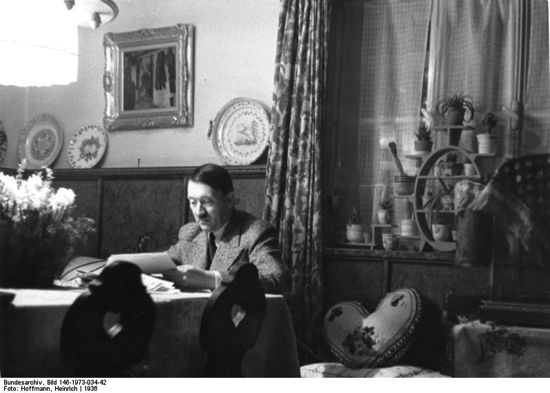 Evening at Haus Wachenfeld
(Bundesarchiv, Bild 146-1973-034-42 / Heinrich Hoffmann / CC-BY-SA)
Below are some shots of the house taken before the renovation:
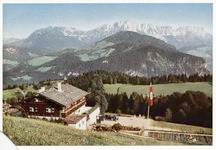
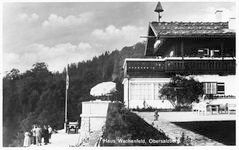
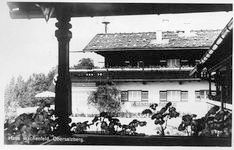
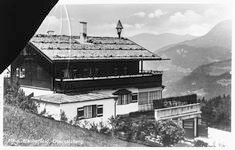
Haus Wachenfeld Painting
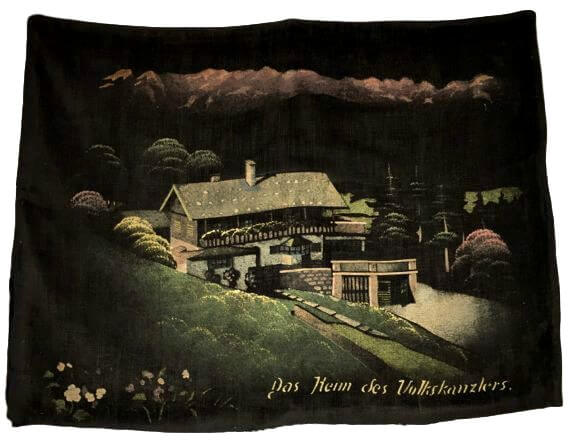 Pillowcase with painting of Haus Wachenfeld
This pillowcase was brought back to the States by a U.S. soldier after the war.
The inscription reads: "Das Heim des Volkskanzlers", or "The Home of the People's Chancellor".
The Berghof
The expansion of the house was carried out in 1935 and 1936. The result was another larger, alpine-style residence that he named "The Berghof", or "mountain farm".
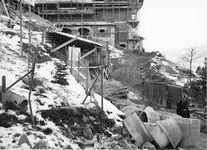 Construction, Dec '35-Jan '36
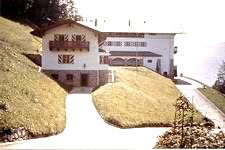 The New Residence
A large area of the mountain was taken over by the Nazis and numerous buildings were built on the rolling farmland. The neighbors for miles around were bought out, including families who had lived on the mountain for generations.
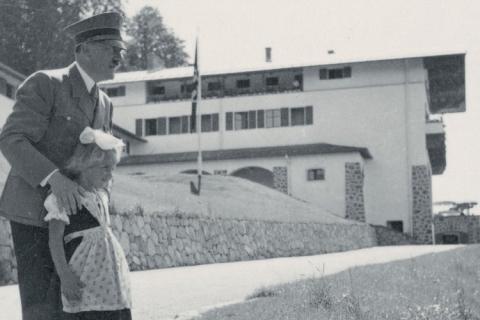 Hitler and visitor, Berghof
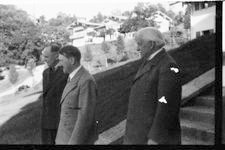 Hitler with Lloyd George
Those who refused to sell were forced out, including the owner of the Hotel zum Türken, who spent three weeks in Dachau before "agreeing" to sell.
In the photo at right, Hitler escorts former British Prime Minister David Lloyd George down the main staircase. The Hotel zum Türken is in the distance above.
Hitler Greets the Public
Hitler's home became quite a tourist attraction. Crowds of admirers used to wait at the end of the driveway for a chance to greet the Führer. Heinrich Hoffmann, Hitler's official photographer, took lots of photos of these scenes.
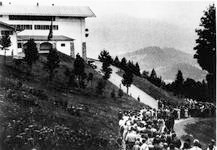 Waiting fans
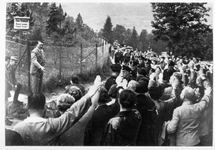 Hitler greeting fans
He especially liked greeting the children, who came to visit in the thousands. Photos below were taken near Haus Wachenfeld, 1934.
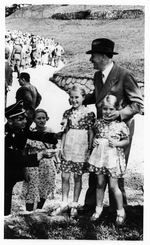
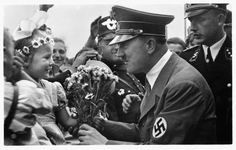
Hitler signing autographs; SS and kids on left, and Hitler Youth on right:
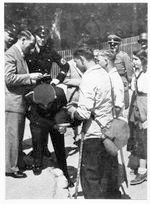
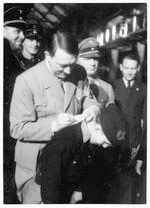
Various youth groups would visit the Berghof and meet the Führer. Below, Hitler got a visit from the Bund Deutscher Mädel (BDM), or League of German Girls, the feminine version of the Hitler Youth, in July, 1939. They had tea on the Berghof terrace.
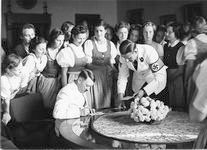 Autographs for the girls
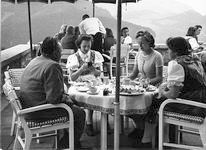 Tea on the terrace
The SS Guards
The SS guarding Hitler were stationed in the barracks further up the hill (now an open field with a Segway track for guests of the Kempinski Hotel Berchtesgaden, formerly the Intercontinental).
They also took over the Hotel zum Türken next door to the Berghof. The guard post they used is still there in front of the hotel.
The SS withdrew just hours before the American soldiers arrived. Barracks Square, as it was called, was heavily damaged in the bombing; no traces of the buildings are left now.
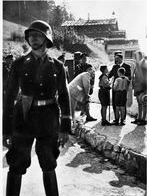 SS guarding Hitler
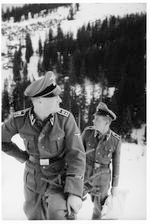 SS on a walk, Obersalzberg
Famous Visitors
British Prime Minister Neville Chamberlain met with Hitler at the Berghof in 1938 during the negotiations that lead to the signing of the Munich Agreement handing part of Czechoslovakia over to Germany ("peace for our time").
Former British Prime Minister David Lloyd George had met with Hitler at the Berghof in 1936.
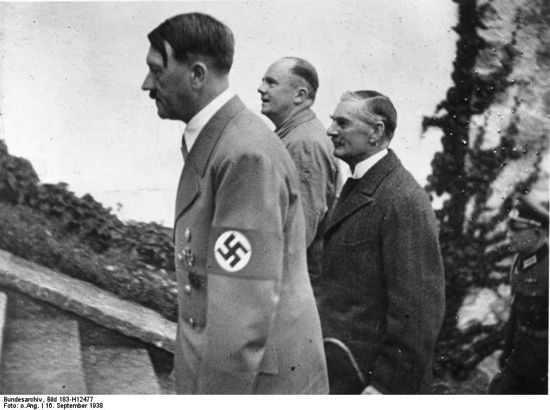 Prime Minister Chamberlain arriving
(Bundesarchiv, Bild 183-H12477 / CC-BY-SA license.)
Other important guests were received there as well, including Benito Mussolini and the Duke and Duchess of Windsor.
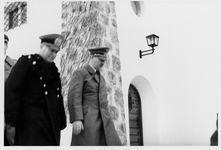 Mussolini and Hitler
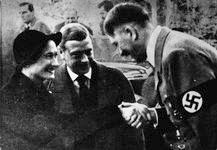 Duke and Duchess of Windsor
Dogs and Children
Other favorite photographic themes at the Berghof, some produced for public consumption and others just candid shots, were photos of Hitler with small children and Hitler with his dog, Blondi.
The Führer and the Children
According to those who knew him, Hitler was genuinely fond of children and enjoyed having them visit at his mountain home.
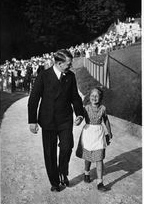 Hitler and Bernile
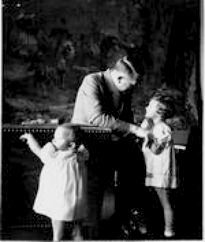 With Uschi Schneider
The little girl in the left photo, Bernile Nienau, was chosen from the crowd to visit the Führer and have a dish of strawberries, on their joint birthday, April 20, 1933.
She became a favorite and visited frequently, until Martin Bormann discovered her grandmother was Jewish and tried to banish her from visiting. Hitler allowed her to continue coming.
Bernile died at the age of 17 of "natural causes", in a Munich hospital, towards the end of the war.
Uschi Schneider was the daughter of one of Eva Braun's friends.
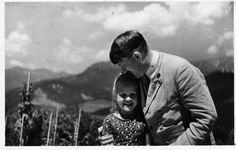 Bernile, Obersalzberg 1934
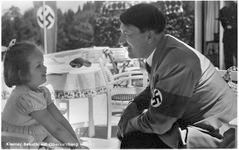 Helga Goebbels (possibly), 1936
Blondi, Hitler's German Shepherd
Martin Bormann gave Blondi to Hitler in 1941, and she lived at the Berghof, sleeping in Hitler's bedroom, and traveling with him in his train car. He took her to his HQ on the eastern front as well.
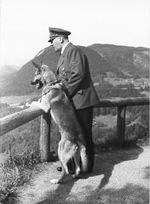 Hitler and Blondi, Obersalzberg
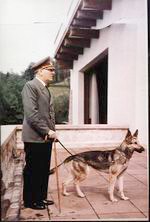 Hitler and Blondi, Berghof
She had a full time caretaker/trainer, Sergeant Fritz Tornow. He was still in the Führerbunker in Berlin after Hitler's death, and was captured by the Russians.
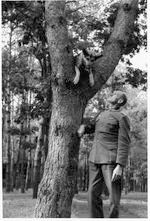 Blondi with Tornow
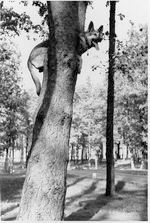 Blondi in a Tree
The photos of Blondi below were taken in Winniza (or Vinnytsia), Ukraine, when Hitler was based there in 1942, at his "Werwolf" Headquarters.
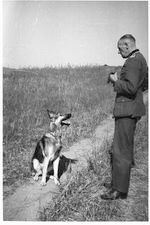 Blondi and Tornow, Ukraine
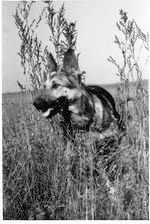 Blondi in Winniza, Ukraine
Blondi met with a sad end when she was poisoned in the bunker, shortly before Hitler committed suicide.
Hitler the Architect
Since Hitler had had an earlier career as an artist, and had a great interest in architecture, he was heavily involved in the design and furnishing of his new home. The building and rooms were created in the monumental style favored by National Socialism and intended to impress.
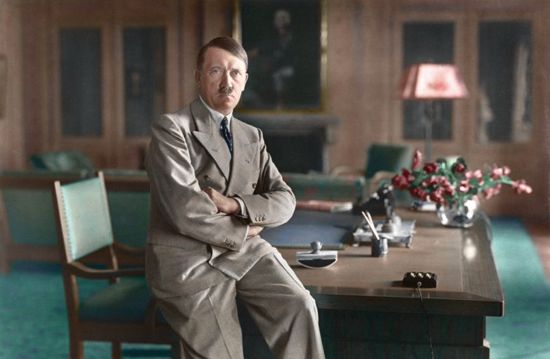 Hitler in His Berghof Office
(Bundesarchiv, Bild 146-1990-048-29A / Heinrich Hoffmann / CC-BY-SA.)
The house was decorated with expensive Persian carpets, Gobelin tapestries and antique furniture, mainly 18th century German.
The Great Room was where Hitler received his important visitors.
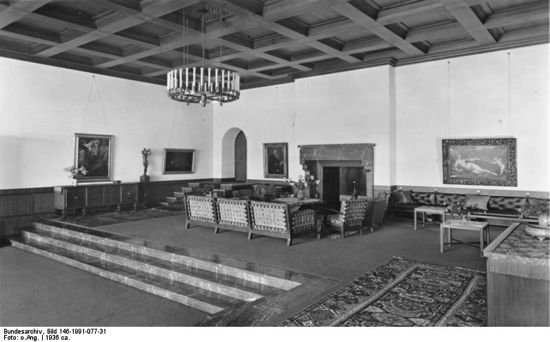
(Bundesarchiv, Bild 146-1991-077-31 / CC-BY-SA.)
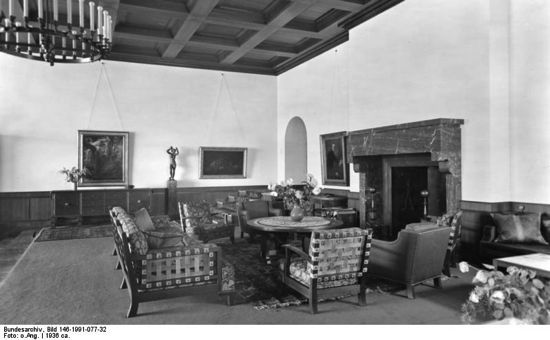 The Great Room
(Bundesarchiv, Bild 146-1991-077-32 / CC-BY-SA.)
The Great Room was huge and had an enormous picture window that looked out at the view of the Untersberg mountain in Austria. Hitler's globe was in this room.
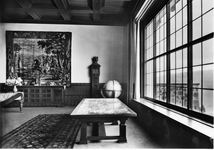 Great Room Window
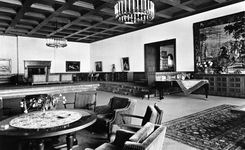 Great Room
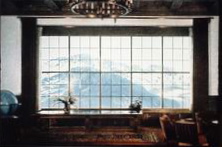 View of the Untersberg
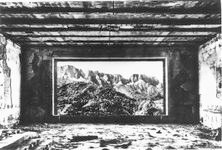 Window after bombing
Through a gap in the mountains, Hitler could see Salzburg's castle. The large window could be lowered into the story below, leaving it open to the air.
Hitler told Albert Speer, architect and manager of Germany's state building projects, "Look at the Untersberg over there. It is not by chance that I have my seat across from it".
According to legend, Charlemagne is sleeping in a cave of ice on the Untersberg, deep inside the mountain. He is waiting for the time when he will be called back to save the Holy Roman Empire; or according to another version, until he is summoned for the final battle of good against evil at the end of the world.
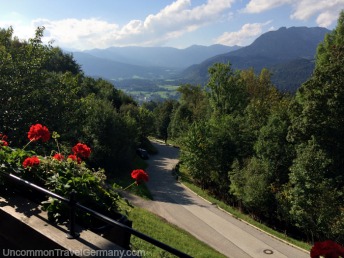
The view from this spot is spectacular. Here's the current view from the Berghof ruins:
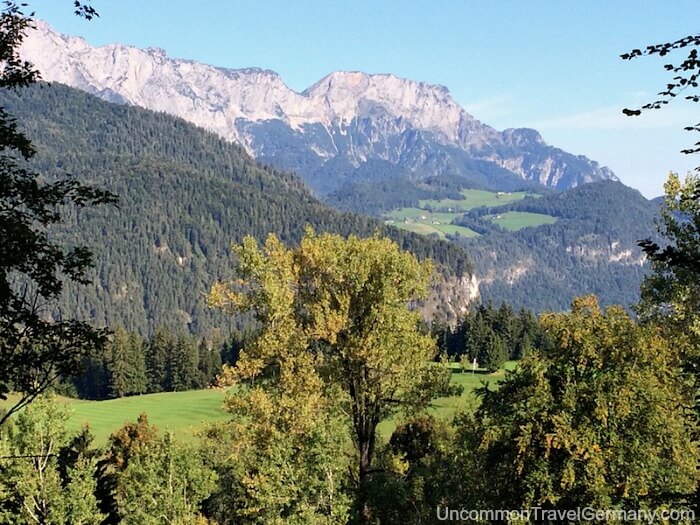 View of the Untersberg from the Berghof Ruins
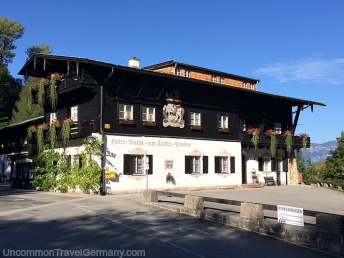
The view from the Hotel zum Türken right next door is almost the same one that Hitler had.
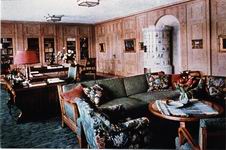 Hitler's office
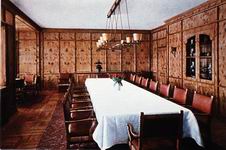 Dining room
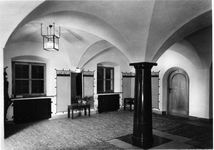 Entryway
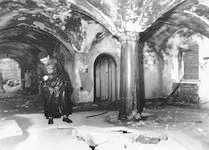 Entryway ruins
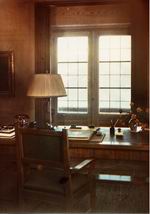 Hitler's desk
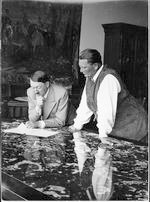 Hitler & Hermann Goering
When the Obersalzberg was secured for Hitler's headquarters, a gatehouse was built just down the road from the residence. Nothing remains of it now.
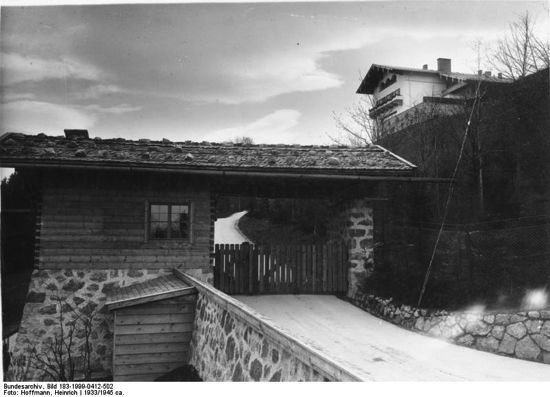 Gatehouse below the Berghof
(Bundesarchiv, Bild 183-1999-0412-502 / CC-BY-SA.)
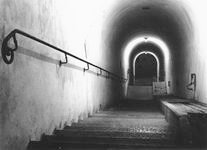
On the right are the stairs to Hitler's bunker under the Berghof. It was never used.
If you go into the bunkers under the Hotel zum Türken (open to the public), one of the tunnels leads to the bricked-up entrance to Hitler's bunker. See Obersalzberg bunkers for more info.
Eva Braun
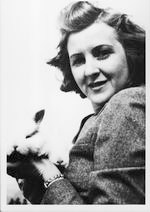 Eva Braun
The German public was unaware of Eva Braun until after the war. From 1936 on, she spent most of her time at the Berghof.
She was kept in the background and not allowed to meet the visiting dignitaries or ministers. Her social life was limited to members of Hitler's inner circle, like Hermann Goering, Joseph Goebbels, Martin Bormann and Albert Speer, as well as her own friends and family.
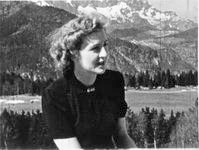
Eva was athletic and amused herself with activities like swimming and skiing on the Obersalzberg.
The photos below are Eva skiing on the Obersalzberg with two SS officers (aides to Hitler) in 1938; neither officer survived the war (Hans Pfeiffer and Hans-Georg Schultze).
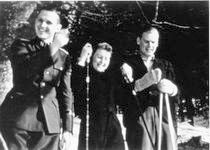 Skiing with the SS
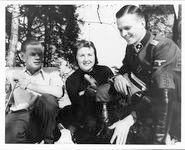 Taking a break
It probably wasn't a particularly happy existence, even though she lived a life of luxury. She attempted suicide twice during her relationship with Hitler; at age 20, she shot herself in the neck, and a few years later she took an overdose of sleeping pills.
Her life ended with her suicide in the Reich Chancellery bunker in Berlin on April 30, 1945, one day after becoming Frau Hitler.
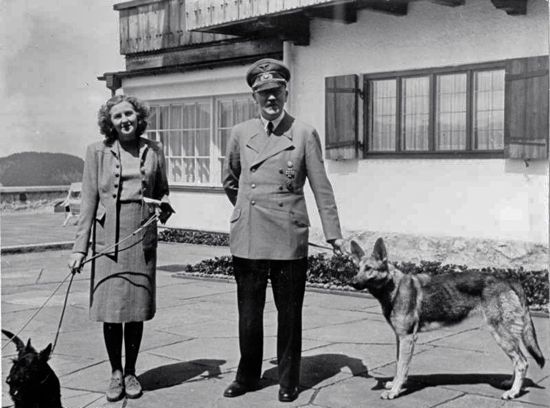 Eva and Hitler on the Terrace
After The War
When the war ended, the Berghof was damaged but mostly intact in spite of the heaving bombing raid on the Obersalzberg on April 25, 1945.
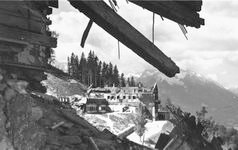 View from Bormann's house
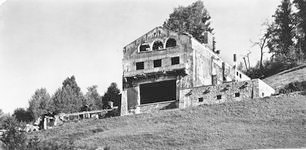 Berghof after the bombing
The houses belonging to Herman Goering and Martin Bormann, as well as the Hotel zum Türken, were severely damaged; the hotel was rebuilt and is still in operation today.
The Unterwurflehen house was the residence of an SS administrator; some foundation ruins remain, covered by underbrush.
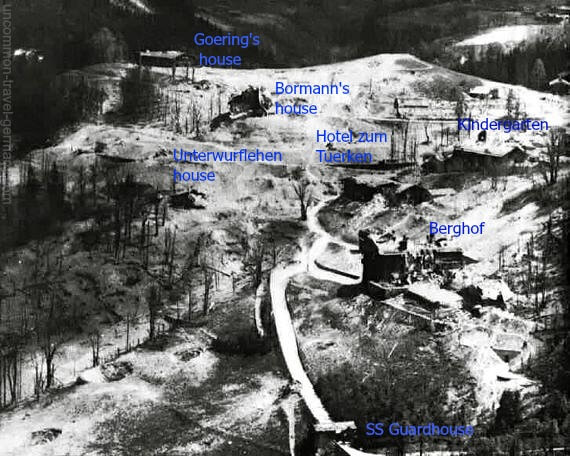 Obersalzberg Area After the Bombing
American Soldiers in Berchtesgaden
Below, members of the 3rd Infantry Division celebrate with the contents of Hitler's wine cellar, on May 4, 1945.
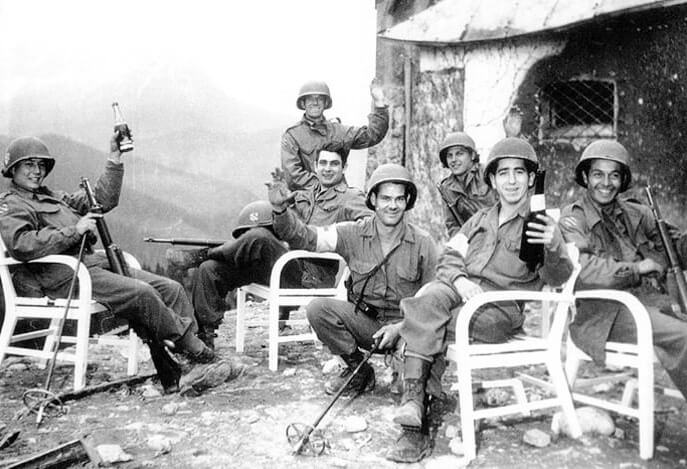 American Soldiers at the Berghof, May 1945
Here are some photos taken by Captain Harry H. Long III (First Lieutenant in the photos), 125th Armored Engineer Battalion, 14th Armored Division, U.S. Army.
He was among some of the first Americans to arrive at the Berghof and Obersalzberg after the bombing.
Captain Long was at the Berghof in June of 1945.
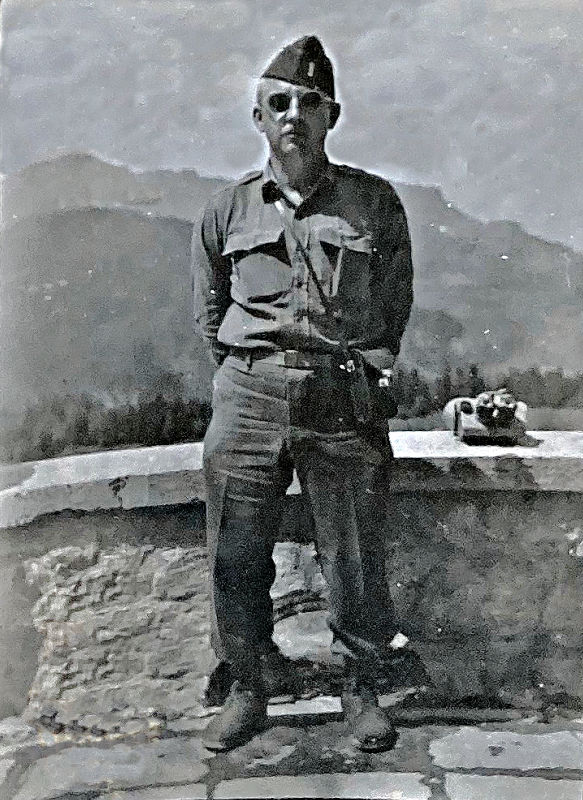 Captain Long on the Berghof terrace
Below is a photo of American soldiers standing in the picture window of the Berghof in June 1945. You can see the Untersberg mountain behind them.
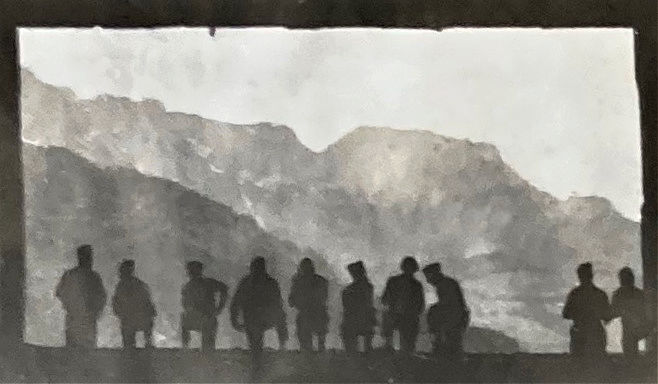 Captain Long and American soldiers in Berghof window
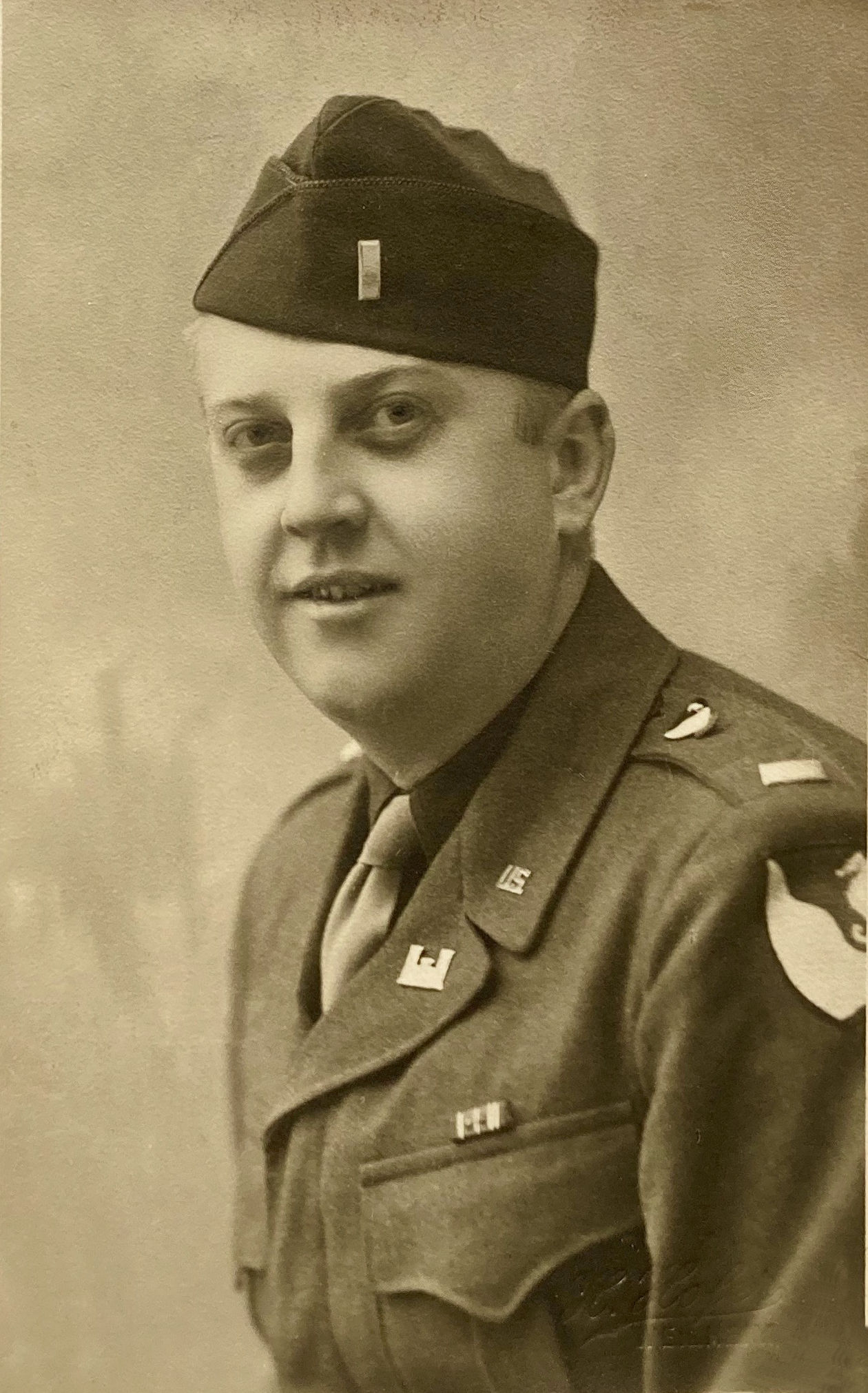 Harry H. Long III
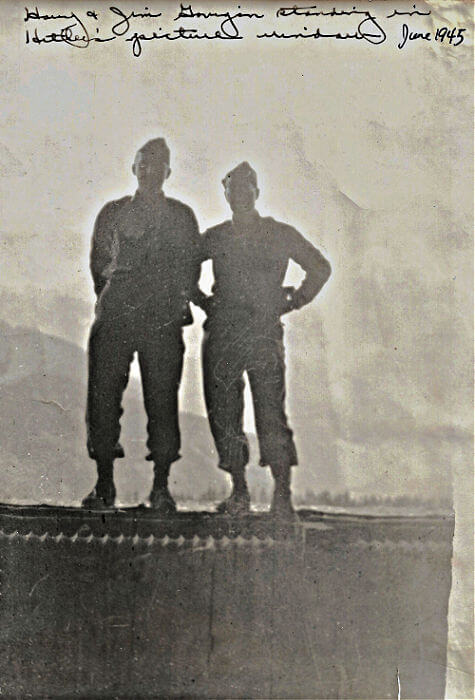 Harry Long & Jim Gavigan, Berghof
The photo below is a view of the Berghof from behind, after the bombing, June 1945.
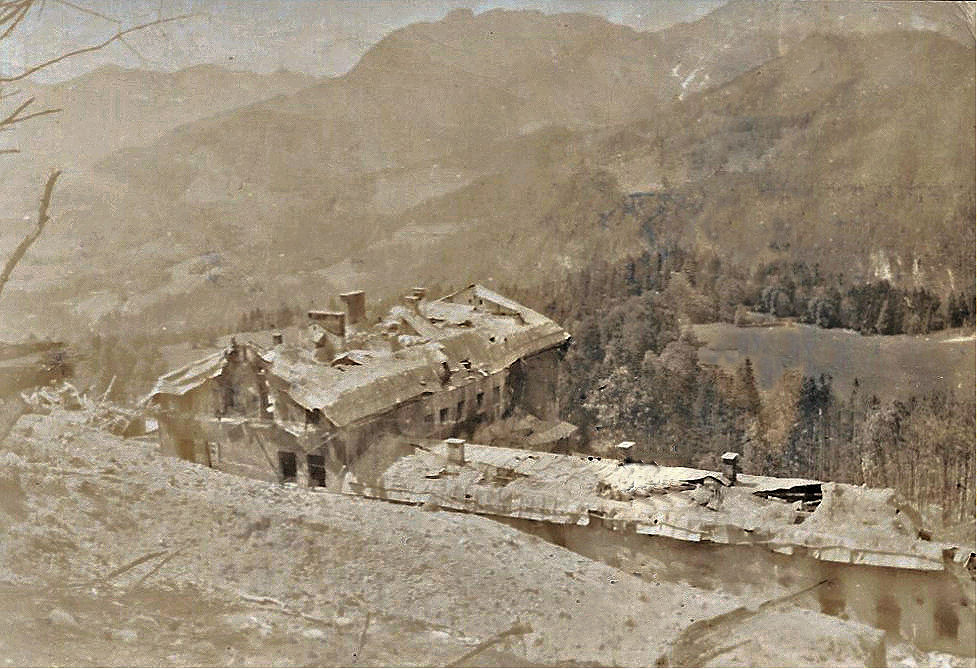 Berghof ruins June 1945
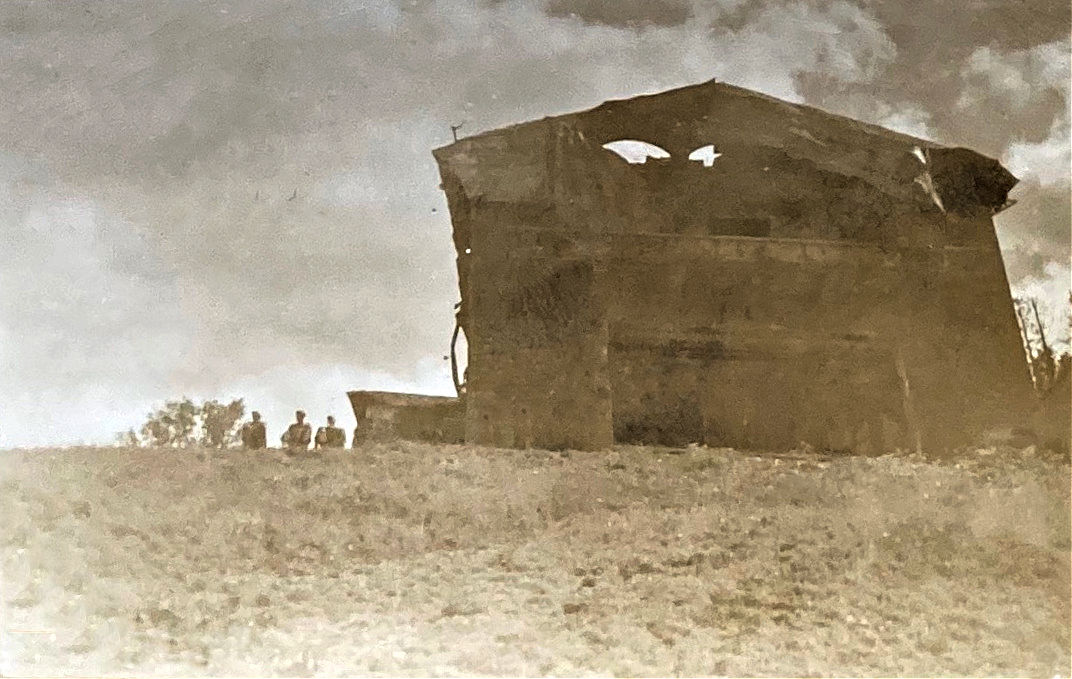 Front of Berghof 1945
Photos shared courtesy of Captain Long's daughter, Linda Long King.
Another American soldier, Norman Edward Schiller, with the 45th Infantry, was present in Berchtesgaden and the Obersalzberg at the end of the war.
His grandson shared some of the photos he took of the Berghof and the Berchtesgaden area when he was there.
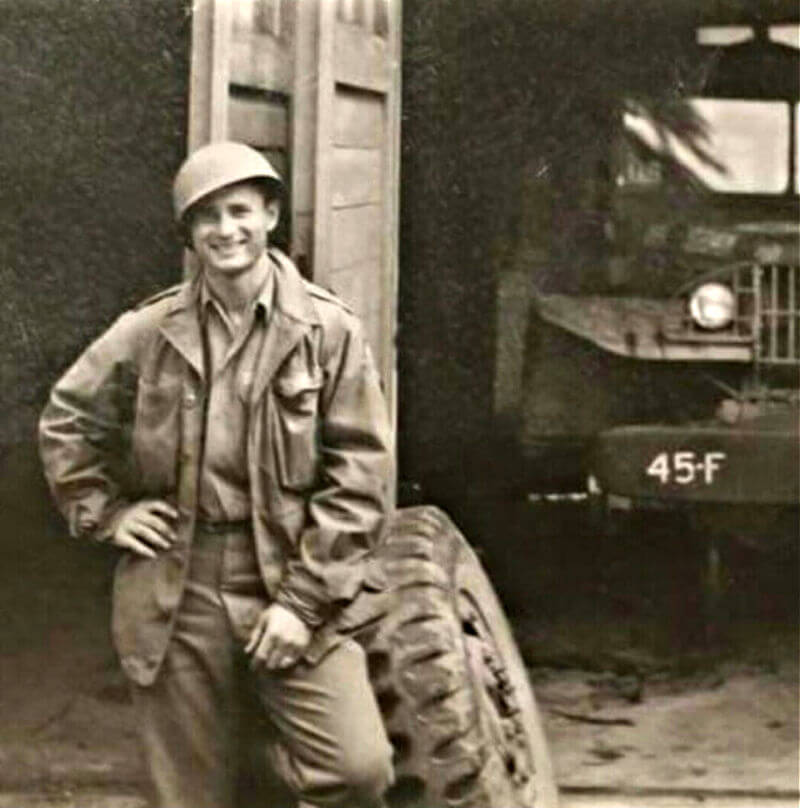 Norman Edward Schiller, 45th Infantry
The following two photos were of the ruins of the Berghof, one from each side.
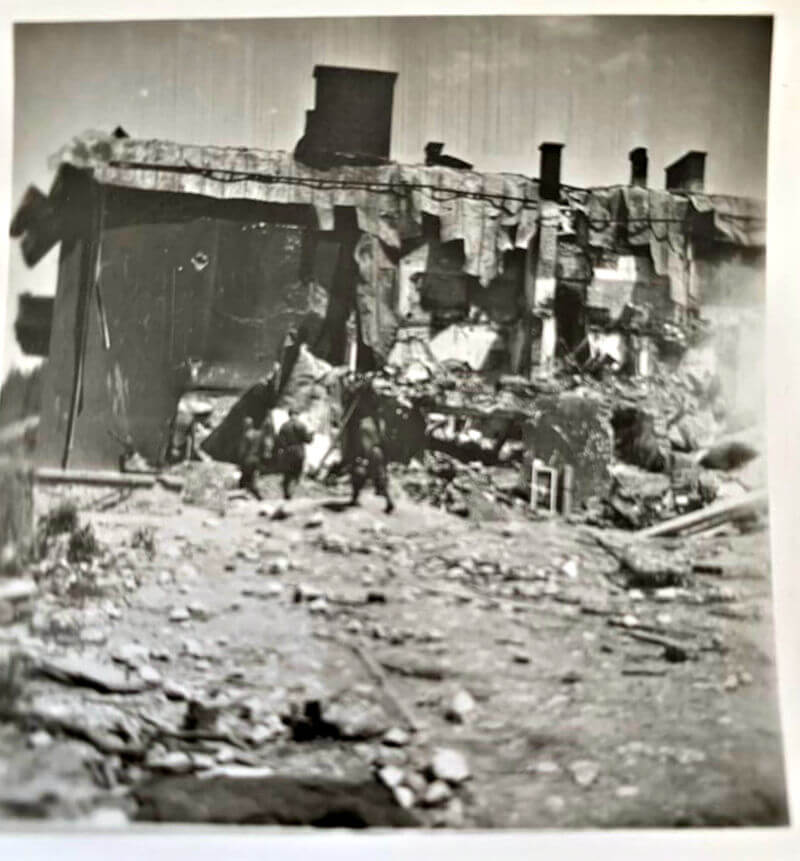 Berghof ruins 1945, American soldiers
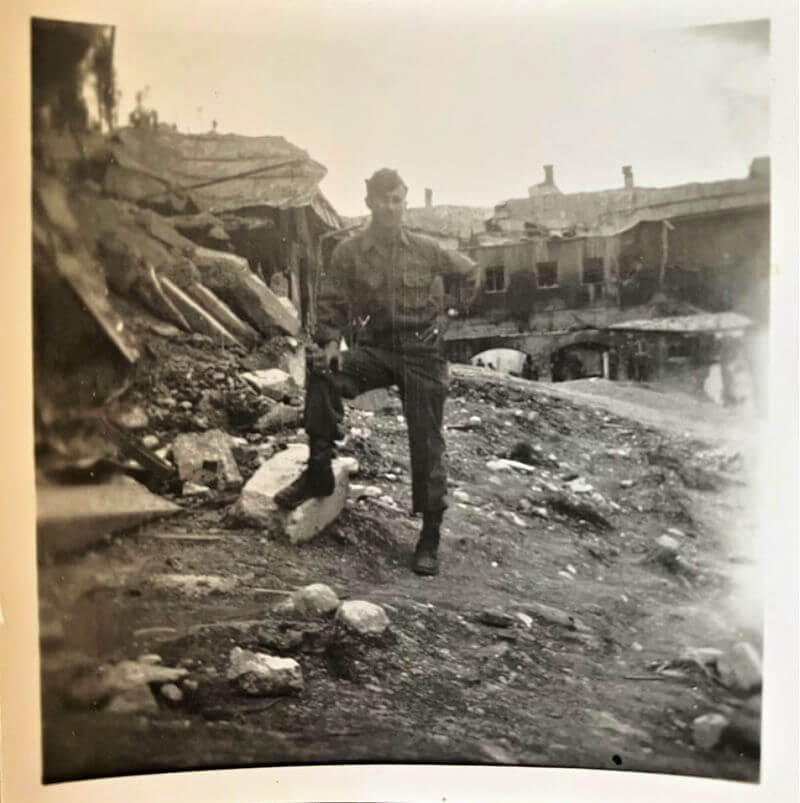 Norman Edward Schiller in front of Berghof ruins
He also took a photo of the boat houses on Lake Königssee.
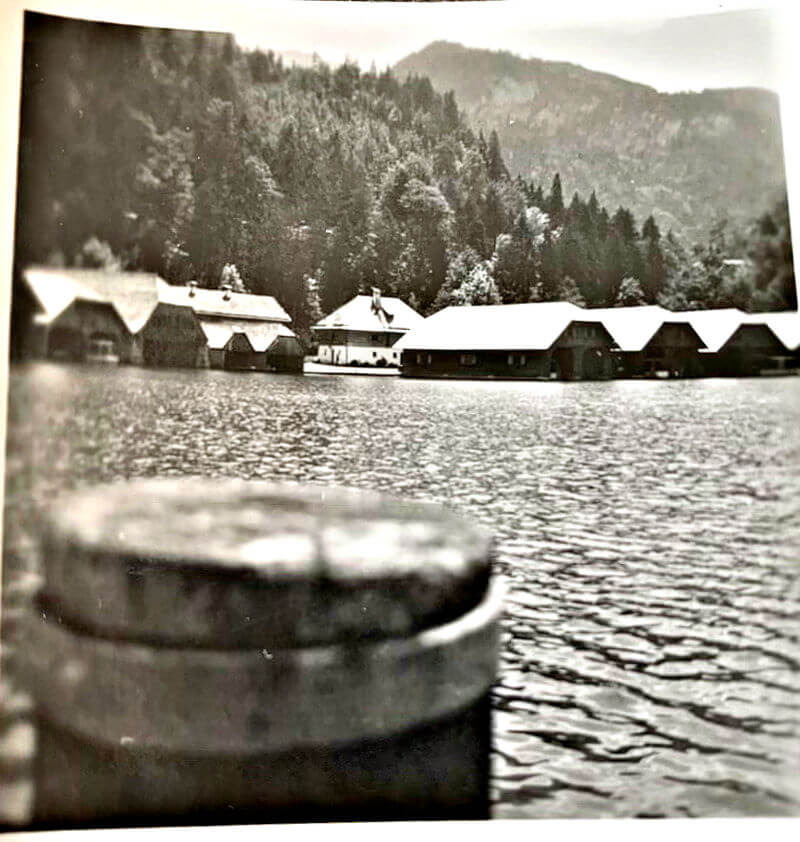 Boat houses on Lake Königssee, 1945
The photo below shows him standing in front of a post office. It's not the one in the Berchtesgaden train station. He wrote a note on the back of the photo that says, "Post Office, Near Hitlers Home".
A visitor identified the location as the right side of the Obersalzberg/Platterhof complex.
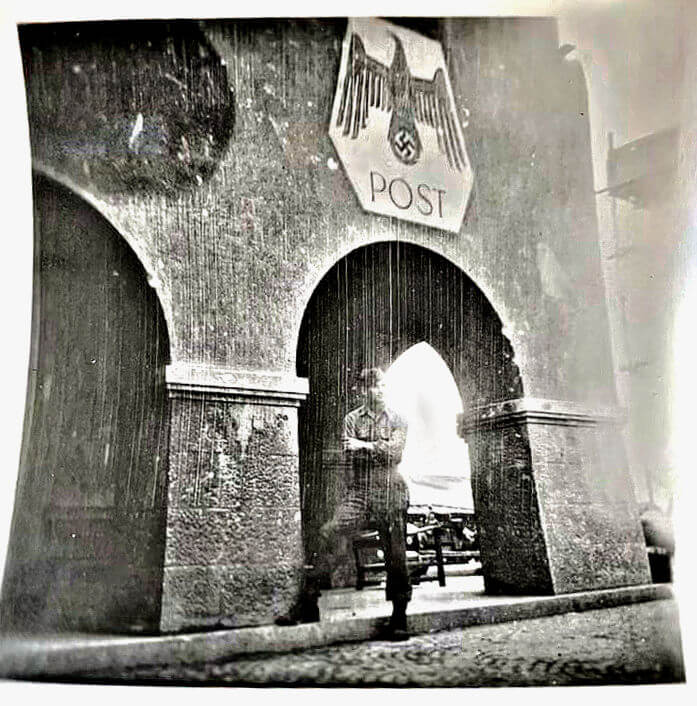 Norman Edward Schiller in front of Post Office
In 1952, the Bavarian government blew up the Berghof and completely destroyed it, hoping to discourage tourists. Later, the rubble was carried away, leaving little more than the foundation walls along the back of the building.
The Berghof Today
The foundation of the main house (right) and the rear wall of the east wing (left) are the only structures still standing.
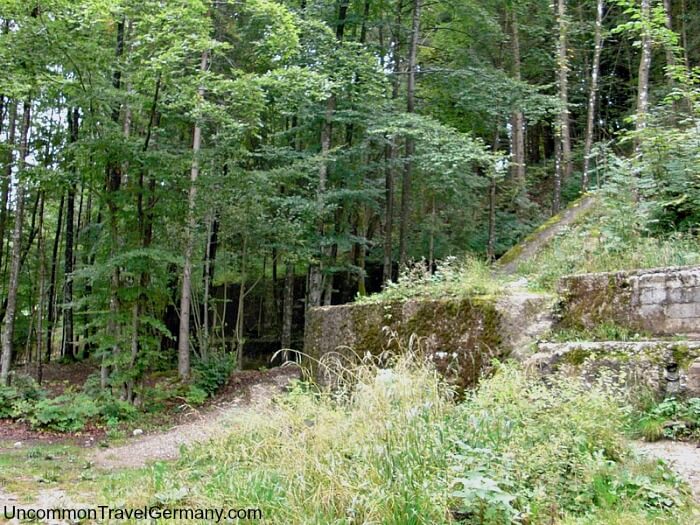 Ruins of the Berghof
Just the rear of the foundation from the main building survives.
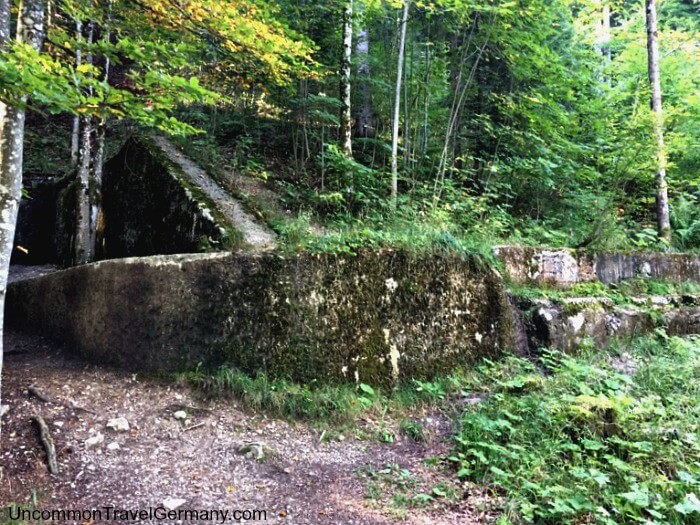 Main Berghof Building
Below are the remains of the retaining walls to the rear of the east wing, which housed the garage and kitchen.
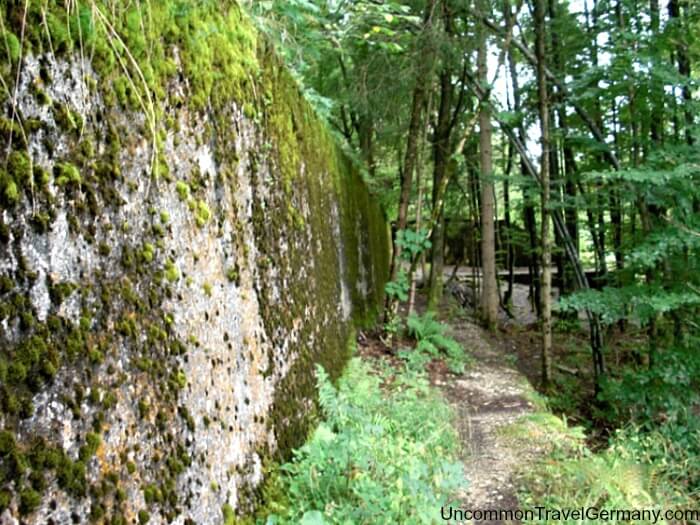 East Wing of Berghof
Underground shaft coming out of the hillside:
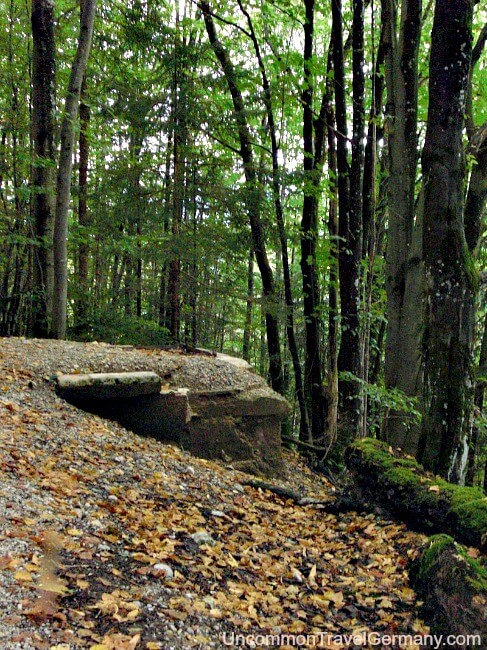
How to find the ruins
The forest has reclaimed this historic spot and only a small path, which used to be the driveway to the east wing, leads through the trees to the location where the building used to be.
There were two driveways to the Berghof. The left one led to the east wing, and the right one to the main residence.
They were just around the bend from the Hotel zum Türken. You can see the layout in the photo below.
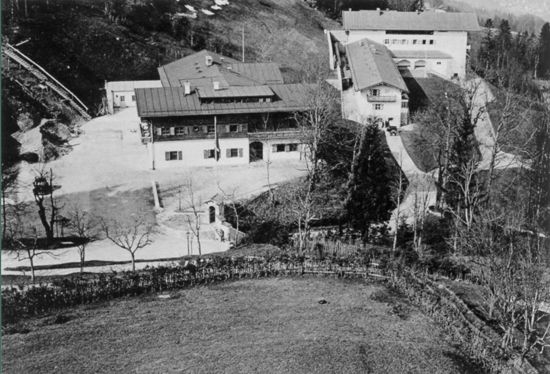 Hotel zum Türken on left, Berghof on right
The path to the Berghof ruins is the small path marked by a yellow sign (which doesn't mention the Berghof), on the road just below the hotel. This path used to be the east-wing driveway.
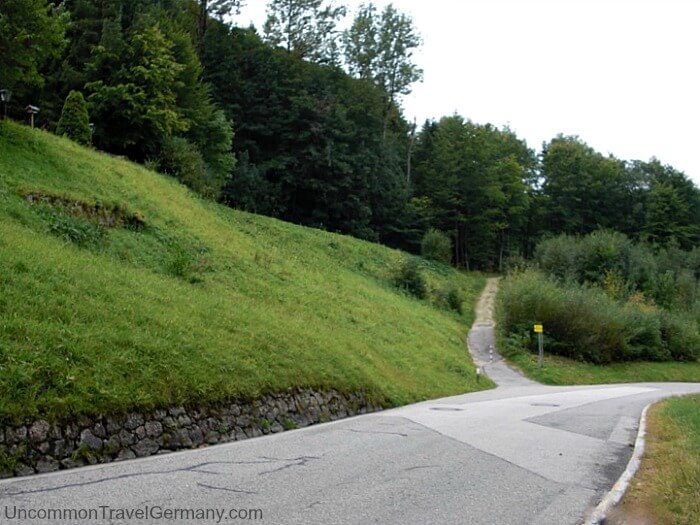 Path to Berghof ruins, former east-wing driveway
Below, on the left, Hitler is standing in that driveway, with the hotel in the background. The photo at right is taken from the same spot.
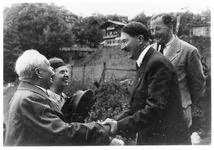 Hitler in driveway
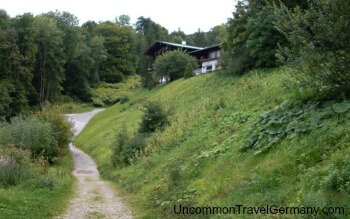 Berghof driveway
The second driveway that led to Hitler's main residence is almost completely gone; there's just a small patch of asphalt at the edge of the road.
The remains of the main driveway are just where the two cars are sitting in the image below.
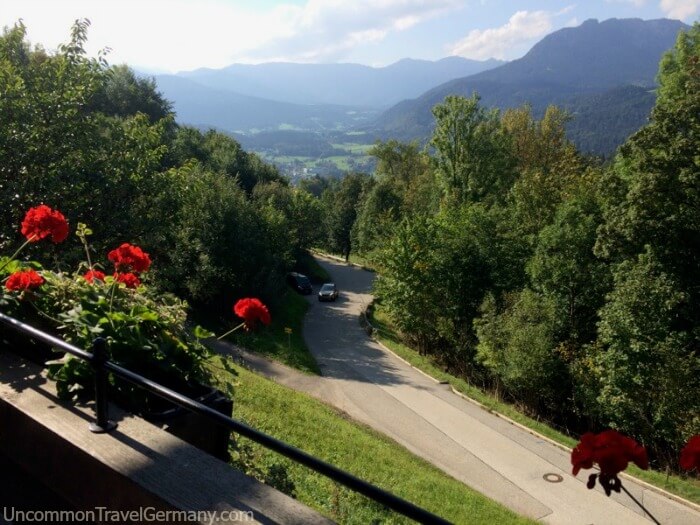 View of the Berghof driveways from the hotel
Here's a map showing the location of the ruins, driveways and hotel.
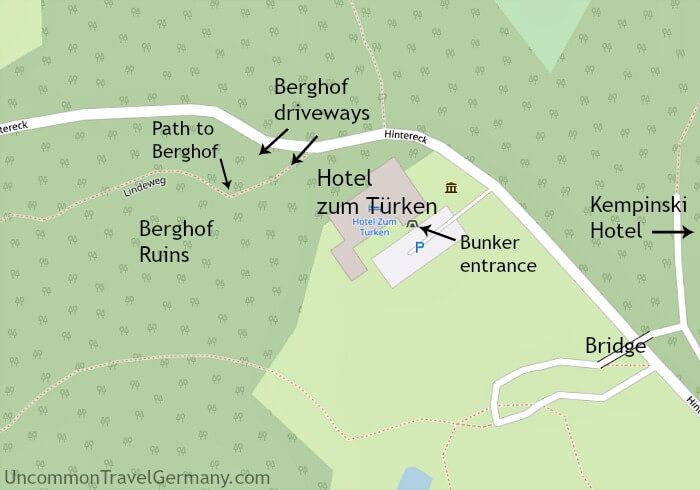
Map data (c) OpenStreetMap and contributors, CC-BY-SA
Map of the Obersalzberg
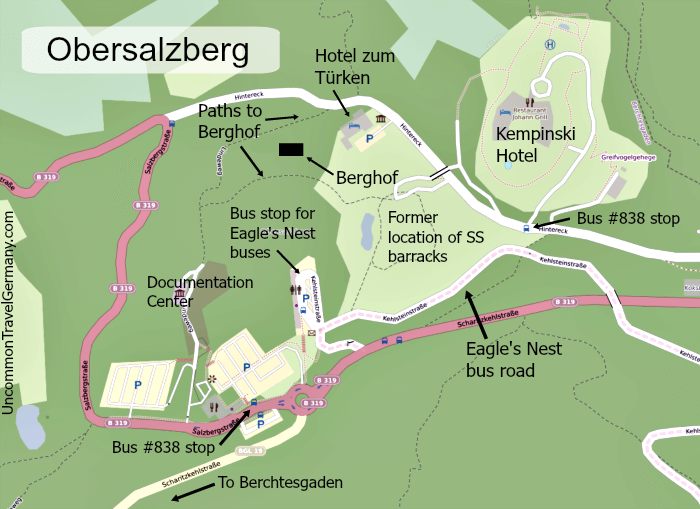
Map data (c) OpenStreetMap and contributors, CC-BY-SA
Super-detailed, historical map of the buildings and bunkers on the Obersalzberg.
Shows the structures from the Nazi period as well as what was there in 1964 when the map was created.
Click on the map to see large version.
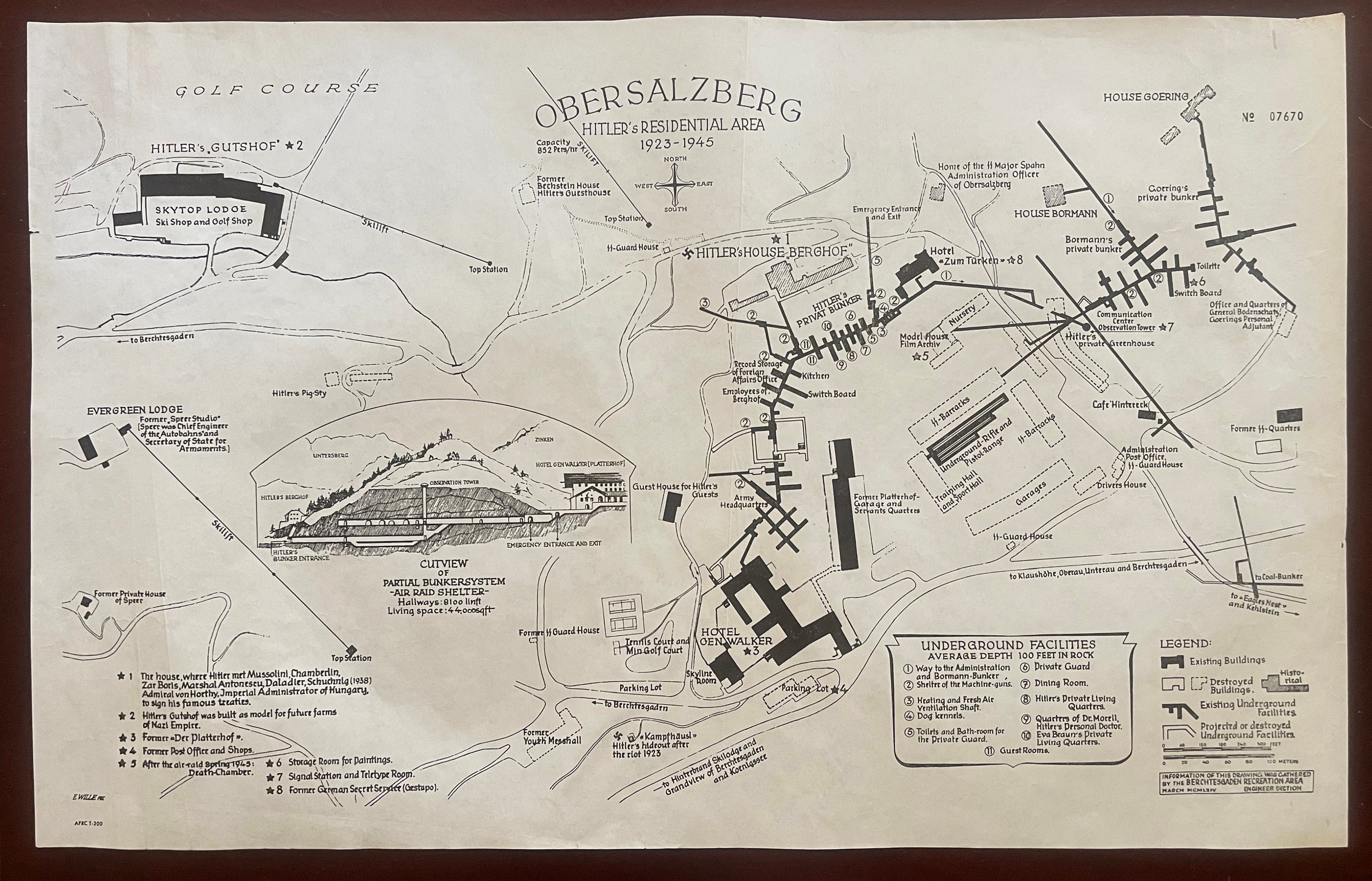
Nearby Points of Interest
The Obersalzberg
Other spots of historic interest are scattered around the hill on which the Berghof sits, the Obersalzberg.
Visit the former Nazi stronghold above Berchtesgaden and explore all the ruins and bunker system. The Documentation Center has an interesting exhibit on the history of the Third Reich.
Hotel zum Türken
Next door to the ruins of the Berghof is the Hotel zum Türken, Hitler's neighbor during the Third Reich period. It was a fascinating place to stay, but it's currently closed for "remodeling". No date yet for reopening.
The Eagle's Nest
The Eagle's Nest, Hitler's conference center turned restaurant is still sitting high up on a mountain peak, with spectacular views. The buses to the Eagle's Nest leave from the Obersalzberg.
Berchtesgaden
The pretty village of Berchtesgaden lies just ten minutes down the hill from the ruins of Hitler's home. Read tips on things to do in town and the surrounding area.
The Königssee
Sail on a beautiful alpine lake, the Königssee, a short bus ride from Berchtesgaden.
Wegmacher Kapelle
In the year 2000, a small wayside shrine, called the Wegmacher Chapel, was built (allegedly) from marble stones used to pave the terrace of Hitler's Berghof.
It caused some local and international fluttering in the media 10 years later, when the origin of the building materials was "discovered" (see Spiegel article). There were some fear it could become a shrine for Nazi sympathizers; it hasn't been in the news since then, as far as I know.
The tiny chapel is located just off the side of Highway 20, a little south of Bad Reichenall, and north of Berchtesgaden.
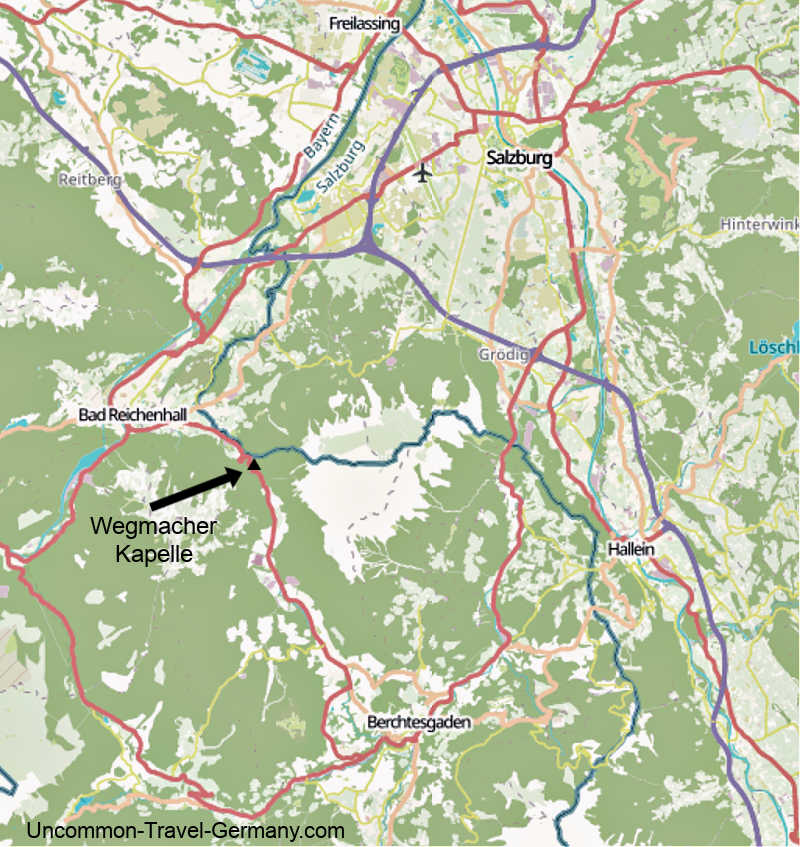 Wegmacher Kapelle near Berchtesgaden
More Photos
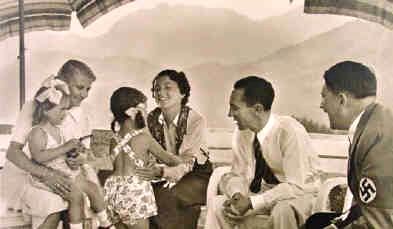 Hitler, Goebbels and his children
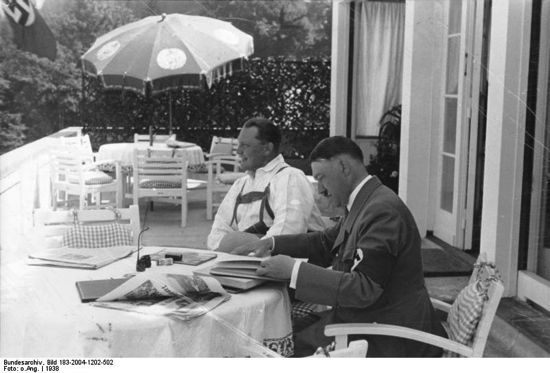 Hitler and Goering at the Berghof
(Bundesarchiv, Bild 183-2004-1202-502 / CC-BY-SA.)
When this photo was originally published, it was accompanied by the commentary:
Hitler and the Bird
Hitler at Haus Wachenfeld in 1934 (Geli Raubal, Hitler's niece, 1931 photo, bottom right); he is feeding a bird, which then jumps onto his shoulder.
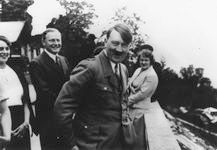
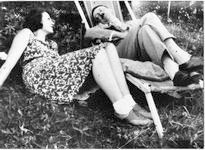 Geli Raubal
At Haus Wachenfeld
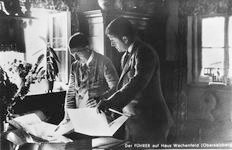 With Albert Speer, architect
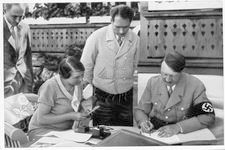 With Johanna Wolff, secretary
Rudolf Hess standing, 1933
With Johanna Wolff, secretary
Rudolf Hess standing, 1933At the Berghof
Hitler reportedly didn't care much for Eva's two Scottish Terriers, Stasi and Negus. He once said they looked like floor brushes. She didn't like Blondi, either (allegedly).
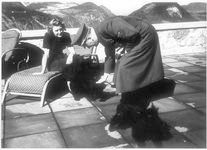 Hitler and Eva Braun
with Eva's Scotties
Hitler and Eva Braun
with Eva's Scotties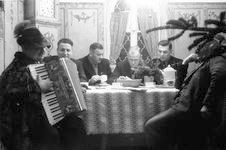 SS being entertained
Hitler's 1937-38 vacation
SS being entertained
Hitler's 1937-38 vacationMore Berghof Rooms
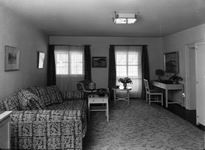 Eva's room
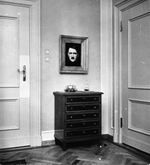 Hitler's portrait
Eva's room
Hitler's portrait
Eva's room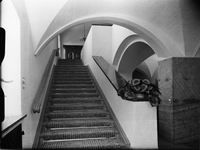 Stairs to second floor
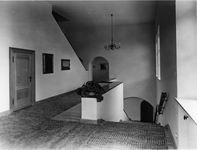 Landing, top of stairs
Hitler's Bunker in the Berghof
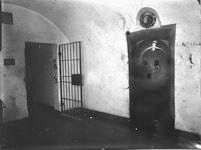
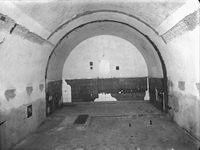
His bunker didn't look bare like the images above at the time. It had carpets and furniture.
To get information on finding your way around the Obersalzberg where the Berghof ruins and Hotel zum Türken are located, plus how to get there from Berchtesgaden, see my tips on getting to the Obersalzberg.
For information on Hitler's birthplace, finding the house where he was born, and what to see in the town, see Braunau am Inn, Austria.
More to explore...
Share this page:
 With my son, Alex
Hello and Guten Tag!
I'm Karen and I've created this website to share my collection of interesting, and often unusual, places to visit in Germany.
I'm a California native, but I lived in Germany for several years, and have made numerous visits back there to explore this fascinating country... off the beaten track.
Enjoy!
Traveling in Germany

Check the German Rail website (Deutschebahn) for train and bus schedules, prices, and ticket bookings.
Use Policy Affiliate Disclosure
As an Amazon Associate I earn from qualifying purchases.
Uncommon-Travel-Germany.com
Copyright © 2007-. All rights reserved.